Go to: Issue Description - Key Facts - Table of Contents
Issue Description
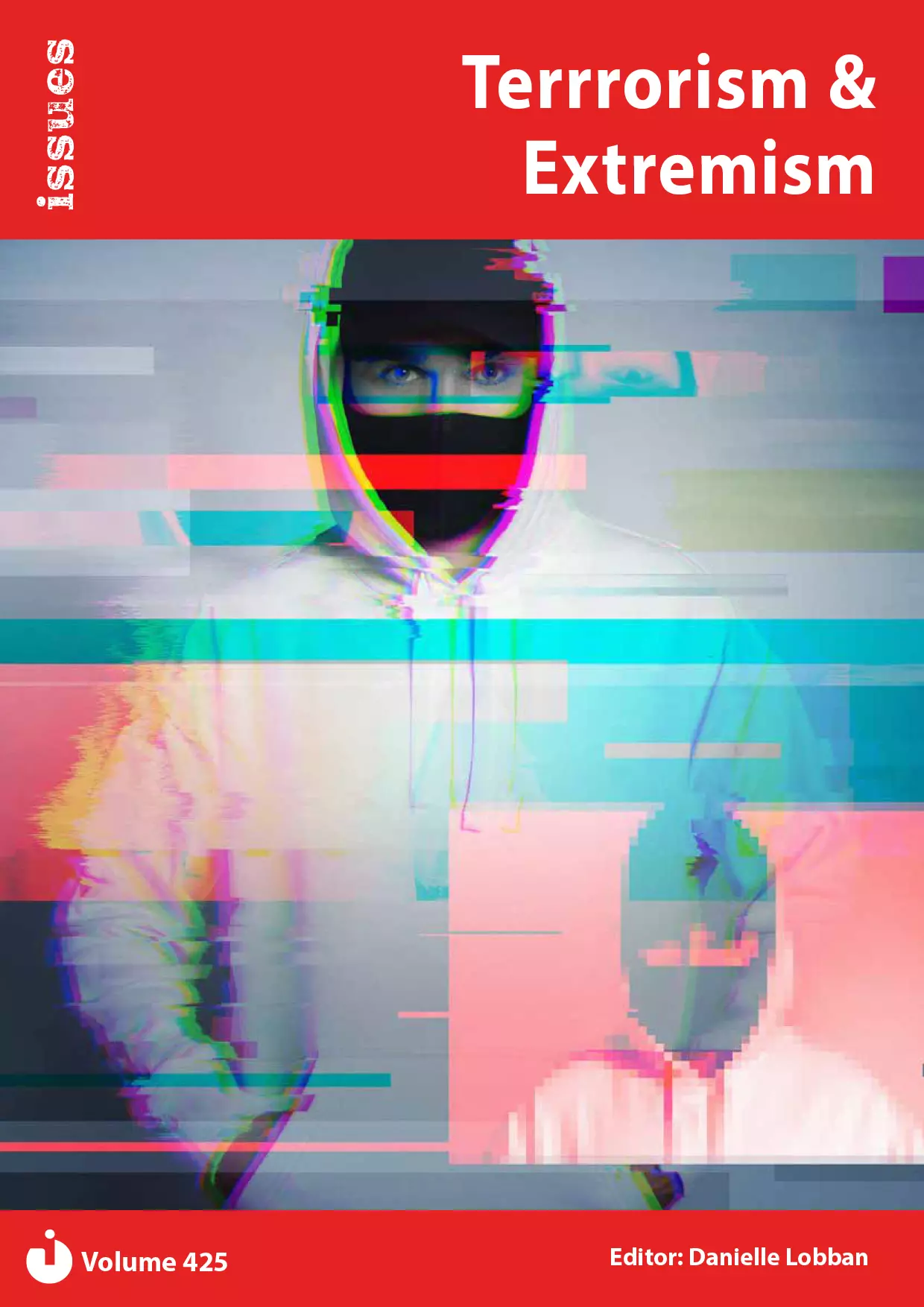
The ever-present threat of terrorism is a worry for many following the high-profile terrorist attacks of the past decade, which have included 9/11 and the 7/7 bombings. Although incidents of terrorism have fallen in recent years, it is still an issue which is high on the political and public agenda. This books looks at the many issues surrounding terrorism and violent extremism, including Irish Republican terrorist groups, Islamic extremism, animal rights extremism, and at effective counter-terrorism measures.
The information comes from a wide range of sources and includes government reports and statistics, newspaper articles, features, magazine articles and surveys, literature from lobby groups and charitable organisations.
return to top of page
Key Facts
- Five years on from the 7 July 2005 terrorist attack on the London Underground, known as ‘7/7’, more than half (53%) of the UK’s population think that the threat of terrorism has stayed at the same level, with older people feeling slightly more worried than younger people. (page 3)
- Several Irish Republican terrorist groups in Northern Ireland reject the 1998 Belfast Agreement and continue to carry out terrorist attacks. These groups were formed after splits within the Provisional IRA (PIRA). They oppose political engagement with the British and Irish Governments on any subject other than the establishment of a united Irish republic. (page 4)
- 25% of those surveyed by Populus/Searchlight in March 2011 viewed Islam as a dangerous religion which incites violence. 21% considered that violence or terrorism on the part of some Muslims is unsurprising given the actions of the West in the Muslim world and the hostility towards Muslims in Britain. (page 7)
- The word ‘Jihad’ is generally misunderstood and therefore provokes strong reactions. It is a word frequently used in the press to mean holy war. In fact the term ‘holy war’ was first used in Europe during the period of the Crusades. It is an alien concept to Islam. War is not ‘holy’. (page 8)
- A tactic first used by al-Qaeda but almost unheard of in Afghanistan until 2005, suicide bombing is becoming more popular with insurgents attempting to meet the Nato campaign with their own surgeof violence. (page 10)
- Universities have more of a problem with animal rights extremists than Islamist radicals, according to an official report that has been criticised for failing to recognise the depth of the problem. (page 12)
- Terrorism legislation allows terrorist suspects to be detained for longer than other suspects and for them to have fewer or more restricted rights. (page 18)
return to top of page
Table of Contents
Chapter One: The Terrorism Problem
Terrorist or extremist activity, 7/7: five years on, Irish Republican terrorist groups, Al-Qaeda, Myths and misconceptions about Islam and terrorism, Groomed for suicide, Animal rights activists ‘more of a problem than Islamists’, Activities.
Chapter Two: Tackling Terrorism
Anti-terrorism powers, The Terrorism Act – the facts, Carbon offsets, Only one in four terror suspects charged, Al-Qaeda will seek revenge, Guantánamo Bay detainees are not ordinary criminals, Activities.